



Let's start with the part most brands won't say out loud.
Alpha Direct is complex. The open, lofted, lining-free knit that makes it such exceptional active insulation is also what makes it vulnerable to snags, pack straps and abrasion. Mindful use and care can make a big difference in how long it lasts.
It’s not a bug, it's a feature, but it is also a trade-off. It is ultra-light, but it is not ultra durable.
It’s worth being precise about what “durable” means here. Durability means two different things with this fabric. The insulation itself holds up extremely well through repeated use, washing and packing. What needs more attention is the exposed face. It can snag, shed loose fibers, and a stray ember can melt a hole straight through it.
Those are two separate issues, and understanding the difference is most of the battle.
We think the trade-off is worth it. We also think you should know how to hold up your end of it. So here's how to get thousands of miles on the trail out of a piece some people wear out in one season.
Different Alpha weights have different durability
We build in three weights, and how careful you need to be depends on which one you own.
-
Alpha 60 is the lightest of the three and delivers exceptional warmth for its weight, but it also demands the most care. It has a very loose weave, and in our experience, tends to shed more loose fiber when new. This is the one that really can benefit from a layer over it and a gentle hand. If you run hot and move fast, it’s an incredible tool. Just don’t treat it like a knockaround hoodie.
-
Alpha 90 is the sweet spot, and it’s no accident it’s our most popular option. It strikes an excellent balance of warmth, breathability and durability. It’s tougher than the 60, but still breathable enough for hard efforts.
- Alpha 120 is the warmest and most durable of the three. It sheds minimal fiber, withstands everyday wear the best, and is casual enough to wear around town without a second thought.
Simple rule: the lighter you go, the more breathability and warmth-for-weight you get, and the more care it requires in return.
Velcro and sparks are the enemy
More than washing, more than anything else, these two are what kill Alpha Direct prematurely.
Velcro grabs the loft and pulls a run before you can feel it. Watch straps, sternum-strap tabs, jacket cuffs, the hook side of anything. Get in the habit of noticing where it is before you reach across your body or put on a pack. Do not wash it with items that have velcro.
Alpha Direct is also not an outer layer for bushwhacking or off-trail use. Brush and tight trail corridors can grab the exposed knit just as quickly as Velcro.
Sparks are the other one. Alpha Direct is polyester, so an ember from a campfire doesn't singe it, it melts a hole straight through. Keep it back from the fire. Most of the damaged Alpha we see started with a snag or a spark, not the washing machine.
Layer it, don't expose it
Alpha Direct works exceptionally well as part of a layering system. Put a shell or light wind layer over it and you protect the exposed knit while still getting the warmth and moisture management you bought it for. Worn as your only layer against pack straps, granite and brush, it takes abrasion it was never designed to withstand. There’s nothing wrong with running it on its own on a cold, still morning.
Be especially mindful in winter, when the monorail or snowpack can lift you three or four feet above the summer tread. Trail corridors that feel wide in summer can close in quickly, putting spruce and branches that are normally out of the way directly against the fabric.
If you’re moving through brush, scrambling over rock, carrying a pack for hours, or wearing the 60, consider giving it some protection. A wind layer or vest over the core covers the highest-wear zones and can buy you many seasons of use.
Washing, the short version
- Cold water, gentle cycle, turned inside out. Your garment tag has the final word.
- Mild detergent. A little.
- No fabric softener. Ever. It coats the fibers, flattens the loft, and strangles the breathability you paid for.
- A mesh wash bag helps reduce abrasion and catches the fibers it sheds so they don't end up downstream.
-
Wash it when it needs it, not automatically after every wear. Less washing means less unnecessary abrasion and wear.
Drying, the shorter version
Air dry it. That is the best way. It dries remarkably fast on its own. Hang it or lay it flat and let it breathe. If the care instructions on your garment allow machine drying, stick to no heat or the lowest heat setting available. High heat and technical polyester fabrics don’t mix.
Shedding is normal. Snags are fixable.
New Alpha Direct can shed loose fiber as the fabric settles. In our experience, the lighter weights tend to shed more when they are new. That generally settles down with use. Don’t fight it with a fabric shaver. You can cut the loft you want to keep. And a snag doesn’t mean your Alpha is done.
If you pull a loop or put a small hole in it, resist the urge to start yanking at loose fibers. A small repair can keep a well-used Alpha going for a long time. We build these to be repaired, not replaced, so if yours needs more than a simple fix, reach out before you retire it.
Store it lofted
On the trail, don’t overthink how you pack it. Alpha handles compression well and rebounds quickly. For long-term storage, though, give it some room rather than leaving it crushed at the bottom of a gear bin. Let it breathe between trips and it’ll be ready when you need it.
Made by people who use it
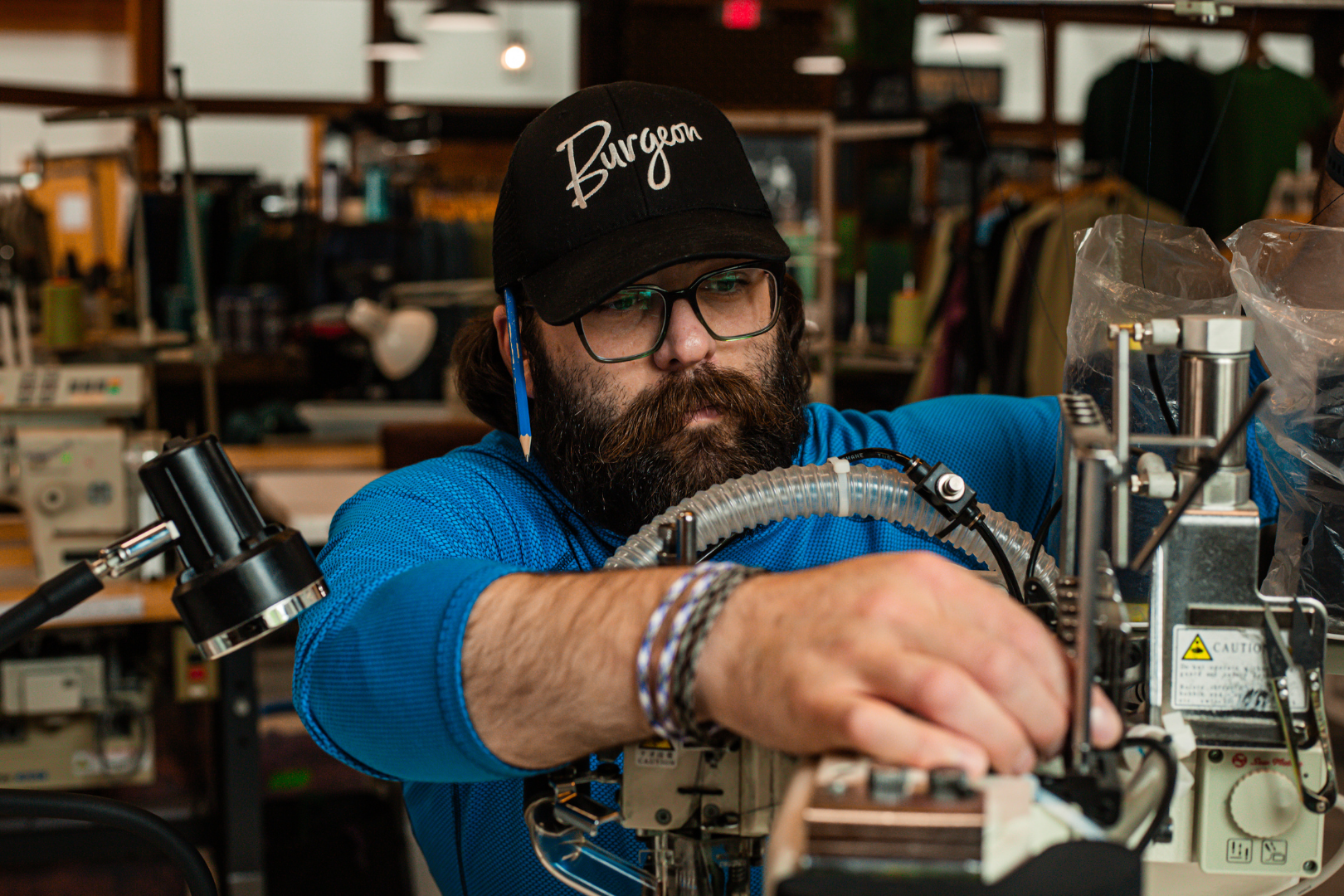
We hand-sew every piece in Lincoln and Gorham, New Hampshire. Some of the people sewing yours have hiked the Triple Crown, and that experience is built into how we cut and stitch it. None of this makes Alpha Direct bulletproof, nothing does. Treat it like the technical tool it is, and your Alpha can stay in the rotation for seasons to come.
Shopping for Alpha?
Find the weight that fits how you move.
Explore Alpha 60, 90 & 120 →
Already own one?
Need help with care or repair?
Contact us →

Comments
This is a great article!! Thank you for providing it. Straight info with strengths and weaknesses of high performance fabrics and materials is rarely provided this directly. It was a very good read.